
The garden’s last gasp

So I went out to see what was left in the garden, and was surprised to find that there actually was something left. A

October garden harvest

handful of cherry tomatoes, a japanese eggplant, and the sole orange bell pepper that was produced by that plant. There is also some basil, beets, carrots…lettuce and spinach coming up that was replanted last month. There are a few apples, but they have black marks on them, souvenirs from the hail. They taste great, but their eye appeal is zilch.

What else? Oh, yes…3 raspberries! There is also a cherry tomato vine that is kicking butt, covered with green tomatoes that showed up as a volunteer in the raspberry bed, a covert stowaway in the compost, I presume. I don’t think the tomatoes will ripen before the frost, but who knows? They won’t go to waste anyway. Chickens love tomatoes as much as they love pumpkins!

The herb garden is going strong still: a few different oreganos, probably a half a dozen varieties of thyme, rosemary, bay, lavender, lemon verbena, the sages. Will be bringing the rosemary and bay plants inside to (hopefully) live through the winter.

Even though the “pickin’s is slim”, there is still a lot to do in the garden, like: getting it ready for winter. How to do this? Not sure! Have to check with my husband…has something to do with compost, I think. And getting dirty. 🙂

(Chicken) Food for Thought

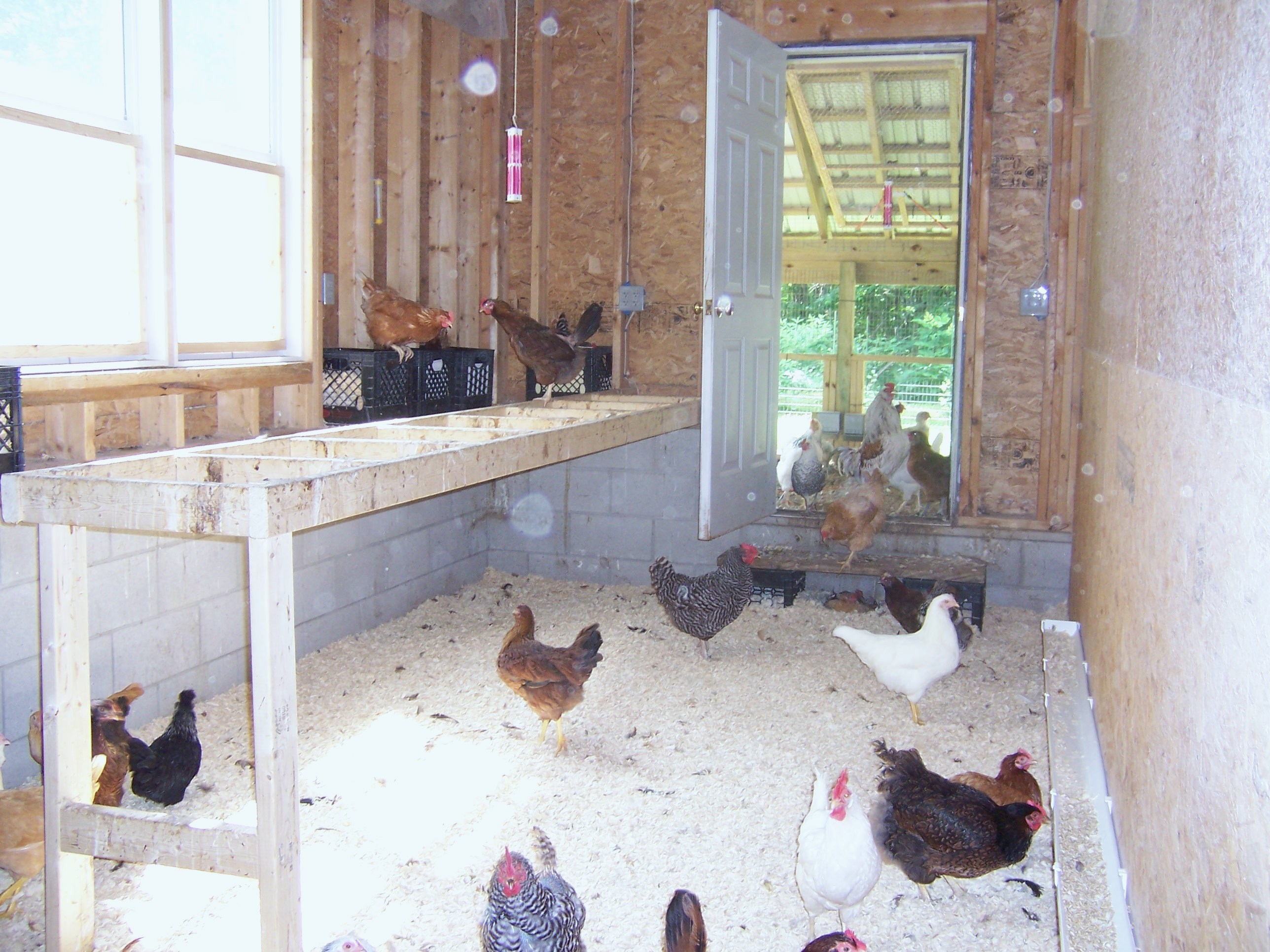
The flock


To all my gardener friends and friends of friends local to Wells: 

Want to do a good deed for your feathered fowl friends? Give us your tired, wretched masses…of produce!
Reasons to bring your inedible, unappetizing, or otherwise unappealing garden food items to my house:
  1. Drive by and drop off! You don’t even have to get out of your car; just lean out and place your unwanted items on the bottom shelf of the egg stand at the bottom of the driveway.
  2. You will feel good because you will be supporting a local farm.
  3. Chickens LOVE most produce.
What to bring?
  1. Unwanted post-halloween pumpkins
  2. Baseball bat sized zucchinis or cukes
  3. Apples and tomatoes (of any color and ripeness) that fell to the ground before you got to pick them
  4. The tired looking, wilty lettuce from the bottom of the crisper that you forgot about
  5. Banged up produce of any kind that you are too nervous to eat..

The chickens say thank you for any and all efforts! 

New Arrivals

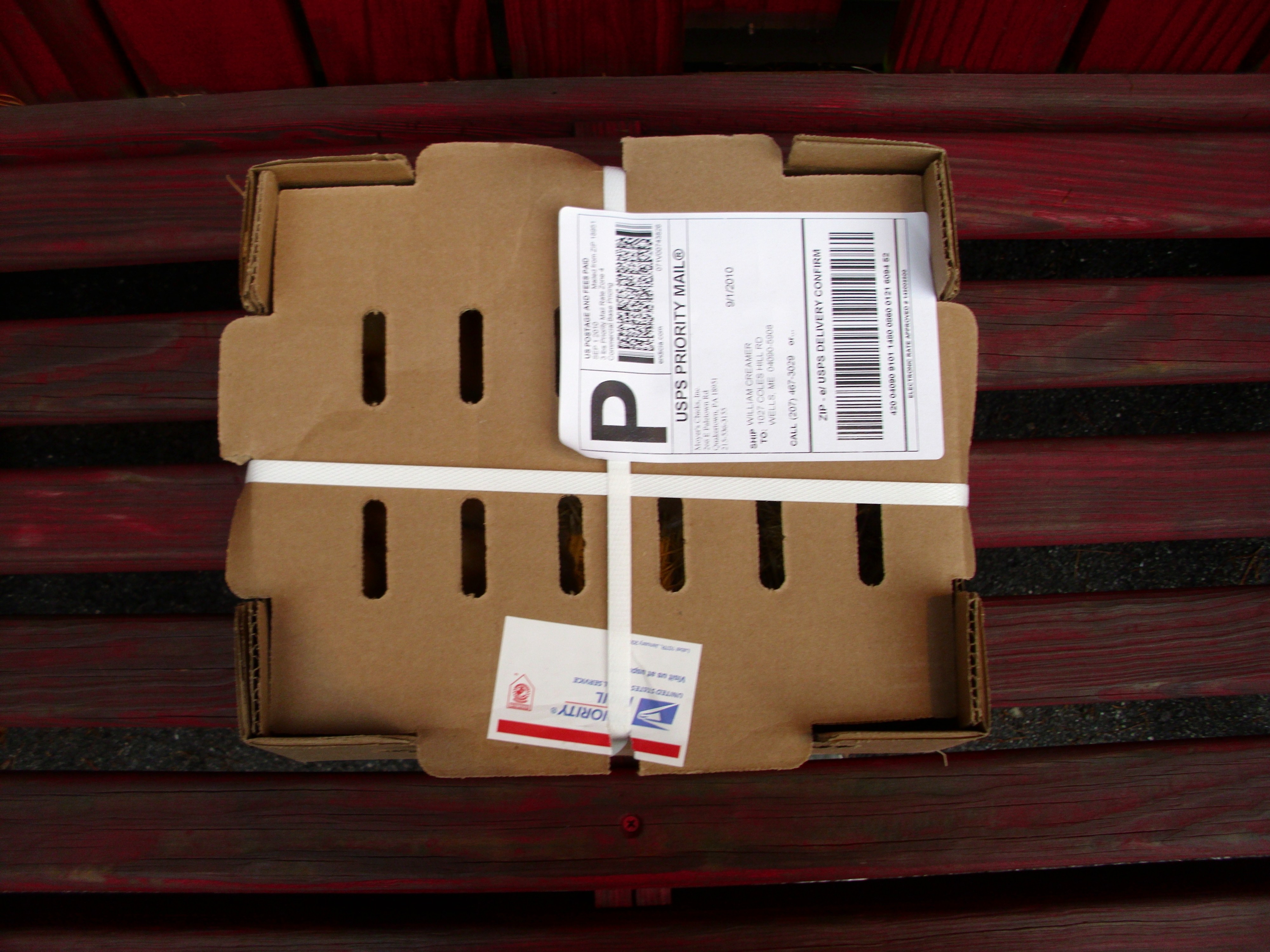
The new peeps were born last Wednesday and scheduled to arrive on Thursday, Friday the latest, through the mail. We did order from a new vendor, one we hadn’t ordered from in the past. We chose them this time because they allowed us

New arrivals

to buy 20 at a time instead of 25. They were cheap; like, half the price of the other vendors. It was also closer; they would ship from Pennsylvania, not Iowa or Texas. This had to be easier on peeps-in-transit, we reasoned.

So, as we’ve done at least a half a dozen times before, we placed our order, confident that they would arrive as scheduled. So confident, that when they did not come on Thursday, my husband went to the post office on Friday morning to get the package.

When they said they didn’t have a package for us, he listened carefully for the tell-tale “peep peep peep”, but heard nothing.

This was not good. Little peeps theoretically can live for up to 72 hours (key words here are “up to”), but they certainly also might not.

On Saturday, at 6:39am, the call came. The chicks had arrived! The news was promising: the package was “peeping”. I went to pick it up, dreading what we might find when we opened it. Both kids and I held our breath…

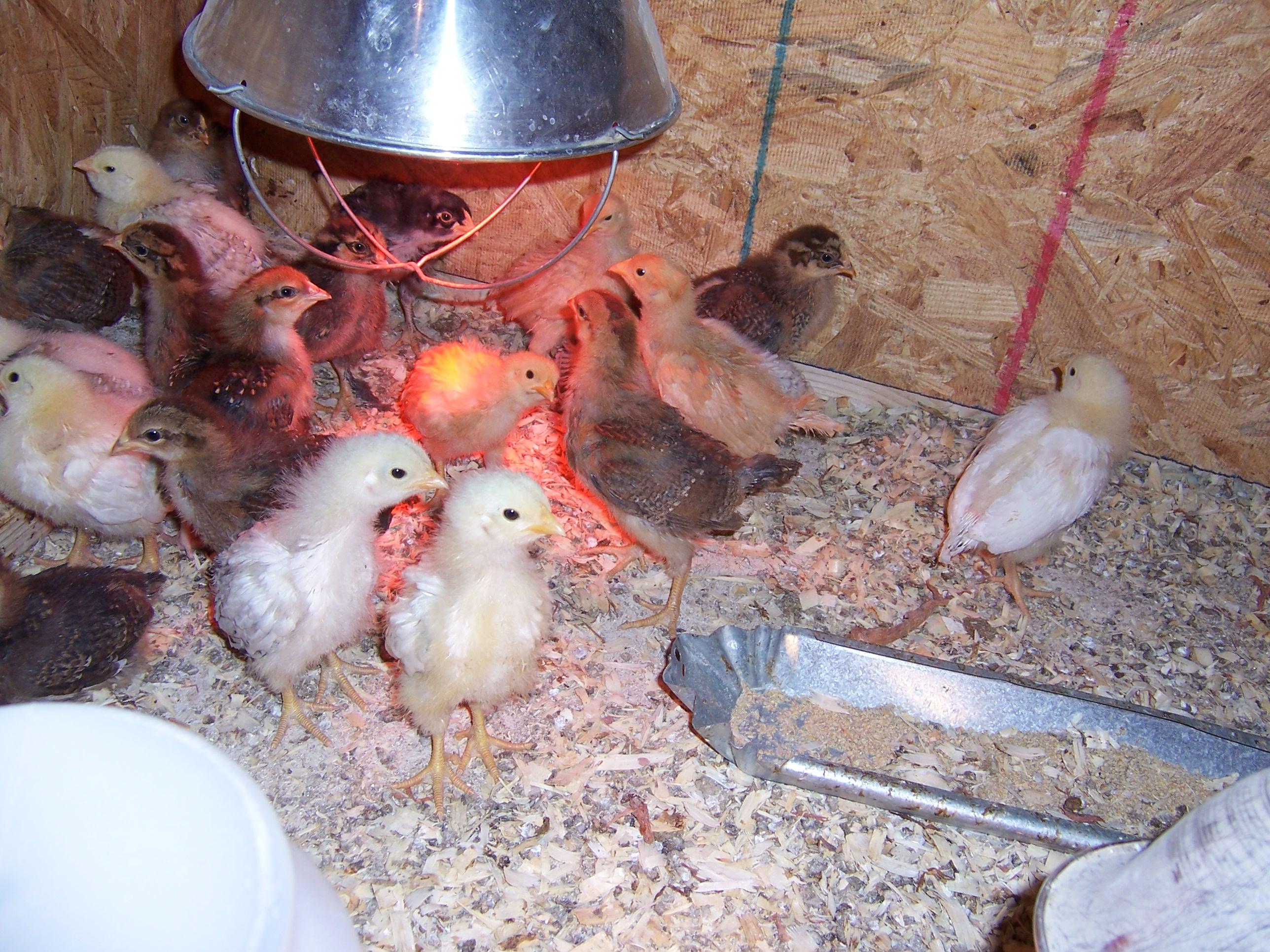
Well, the good news was this: all 21 chicks were living and peeping. All took a drink when coaxed. All found the food.

The bad news is this: with in 2 days, we had 6 dead bodies.  We’d never lost more than 1 0r 2 chicks right away like that. It was kind of awful. Every time one of us went out to check on them, there would be another little casualty. 😦

There are 15 chicks left, and all seem to be doing well. Hopefully the worst is past.

Needless to say, we will likely not be ordering from them again.

This slideshow requires JavaScript.

How it feels to be attacked by a rooster

The rooster


Ever wonder how it actually feels to be the target of a rooster? I didn’t give it much thought, actually, until it happened to me. 

So, what’s it like? 

  1. Well, the first thing was, I was surprised! I had no warning that the big guy was about to come at me. I was just collecting the eggs at the end of the day, when I hear a squawk and felt something pierce my leg. This leads us to the next feeling:
  2. Pain! I felt searing pain in my calf at the site of the pecking. It felt like my calf was on fire. I had heard in the past that if a rooster is coming at you, you should advance toward him. So, with a “never let ’em see you sweat” bravado, I advanced. Unfortunately, so did the rooster (please note: rooster’s bravado was not false). Score another peck for the rooster.
  3. Next, anger starts to creep in. At this point, I didn’t know how badly I was hurt. I was trying hard to hold it together so that my daughter, who was on the other side of the (closed) coop door yelling, “Mom! Mom! Are you all right??”, would not freak out. But hey, this rooster was big! and was not backing off! I decided that a well-timed scream of “Get away from me!!”  at the offender was in order at this point, as I made for the door and managed to get out without him following me. This time I exhibited some well delivered, effective bravado for the purpose of relieving my daughter of her fear about my well-being.
  4. Finally, time for my fear. How bad were the wounds? Puncture wounds from farm animals seemed to me to be a likely source of virulent infection. I reasoned that since it was my own farm animal, however, I had less to worry about than I might have had it been a wandering, vagabond rooster  (I also began to second guess my artless, not quite factual affirmation of a tetanus booster “within the last 5 years” to the ER nurse last month where I went to have a foreign object removed from my eye). Well, it actually didn’t look too bad, thank goodness, which led to the final emotion:
  5. Relief. No ER trips today; home treatment is all that is needed.  After a good old-fashioned washing with soap and water, ice and arnica would do the trick.  Three days of observation for symptoms of infection were also indicated, which I did, and there were (fortunately) none.

For future reference, here is some advice about how to protect yourself from a rooster attack.

Any other tales of rooster woe out there?

New baby gift

Maybe you have a lot of new babies to buy for this year.  After a long time with the arrival of no babies within my personal sphere of (gift-buying) influence, I find that having just finished putting together a gift for one new baby girl, I have two more baby girls in the picture. One is here already, one is due in the fall.

I used to have a formula for baby gifts, kind of like the wedding day rhyme: “something old, something new…” Too bad that it has been so long, I can’t recall exactly what that formula was.

So, here’s my new top 10 list for what to put in a baby gift basket:

  1. If the sex of the baby is known, consider a pink or blue addition. You may want to have all of your gifts (and even the basket itself) be pink or blue, but I’ll leave that up to your discretion.
  2. Add something handmade to the basket. I’m a sporadic knitter, so I like to add a hat or a blanket if I have time to make it myself, or buy one at a craft show if I don’t.
  3. A favorite book, like (of course) Goodnight Moon, is always a nice addition to a baby gift basket. Pat the Bunny is another good choice. You might consider having your entire gift consist of children’s books that you like.
  4. Babies excrete. Often copiously. An extra outfit or a nightgown or jammies of some sort will be needed (soiled, stained, and appreciated) over and over .
  5. Babies spew. They will need bibs. Multipacks of bibs (because, did i mention? babies drool. A lot).
  6. Babies visually track. Get some colorful, cheerful toys that appeal to many senses: crackling, ringing, textured…and safe. Check that you are buying a toy appropriate for a newborn.
  7. Babies sleep. Blankies and extra jammies are always needed, often in large quantities (reference #4 and #5).
  8. Babies travel. A diaper bag, pack-type baby carrier, and so on may be nice.
  9. Babies get dirty, so bottles of baby wash, shampoo, little facecloths and hooded towels are another idea.
  10. Babies get red bums. Butt paste, desitin, vaseline…all might be helpful for their little bottoms at some point.

That’s it. What are some of your favorite baby gifts to give? to get?

eggs!

our multicolored eggs

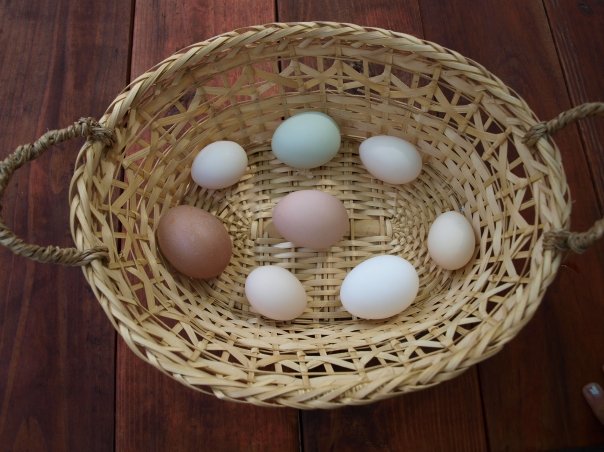
speaking of egg color driving our hen choices every year (see prior post ), here is a sampling of some of what our flock puts forth every day.  the blue and green eggs come from ameraucana chickens. marans, barnvelders,  and welsummers lay the chocolate brown eggs. . . and the white leghorn hens lay large, perfect, white, hard-shelled eggs.

when we collect the eggs, we never really know for sure what we will get from day-to-day. some hens lay quite frequently, some not so much. we also never know for sure where we will find them. although they have beautifully outfitted nest boxes, some hens just take a liking to a particular spot and will lay their eggs there, nest box or not. then it’s a challenge to avoid “walking on eggshells” when we go to throw them some treats or collect the days eggs.

one likes to lay her eggs on the ground to the right of the stairs that lead out to the run. another deposits hers out in the run.  if we find an egg in the same spot a few times, my husband will place a nest box there for that hen, although there is no guarantee that she will take advantage of it.

the eggs also vary in size; sometimes (when hens are first starting to lay) the egg is as small as a marble! sometimes they are as large as a tennis ball, and we have found eggs of every size in between.  shape varies from perfectly round to oval to oblong. sometimes they are asymmetrical. they are never boring.

It’s (probably) a girl!

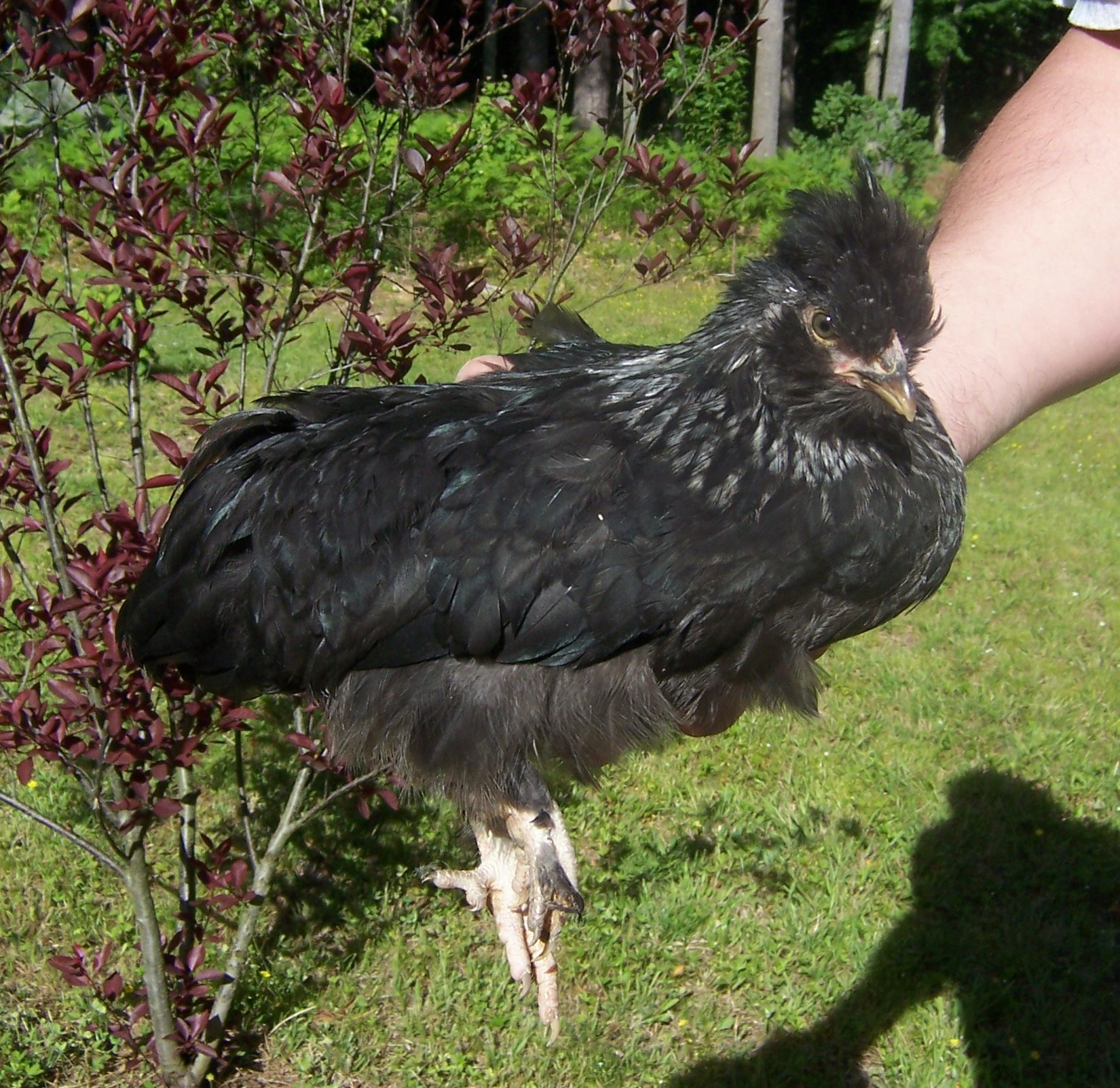
Well, it’s been a little more than 3 weeks and it’s looking more and more like he is a she. Of course, all the data is not in, but very soon it will become unequivocal.

For now though, she is still a runt, much smaller then the other chickens. We attempted to take a picture of her next to a more normal sized hen, but she was running around (and at one  point actually became airborne) so much that we weren’t able to pull that off. We did manage to get one picture of her holding still, while she was held (compare to original picture).

So, the whole issue of naming is rearing its ugly head. Naming chickens carries inherent heartbreak. It seems that it’s always the chicken that you love the best that the hawk will get, or that will come down with the mysterious virus that sends them to “the corner”. When the chicken goes to “the corner”, it will usually be dead in three days.

Now is it because three days of standing in the corner will result in death? or is it that three days before the chicken knows it’s going to depart this world for the big henhouse in the sky, they seek out the comfort of  “the corner”?

It’s kind of reminiscent of the age-old “which came first…” question.

So, we are putting off naming her, but two contenders for the name of the chicken that we are trying not to name are both androgynous. Vote for the name you like the best.

naming chickens

our new baby chicks

naming your chickens may start out innocently enough…you notice they have their own unique personalities, and you warm to them. for example, the first year we raised chickens, i had one hen that loved to dine in my herb garden, which was conveniently placed next to the coop. she quickly earned the name “Basil”, followed by “Rosemary” (for obvious reasons).  “Chiclet” was next, and so on. all was well for a while.

the problem with the naming of the hens may not be immediately evident, but some of you who are chicken farmers know where i’m headed with this: chickens lives are (often) not long, and not without peril. in other words, sometimes bad things happen to good chickens: illnesses. accidents. sometimes their misery needs mercy, and it is so much harder to bestow that mercy on Chiclet, versus on ‘that yellowish older chicken over there’, who is one of many faces in the crowd.

here’s a link with some helpful information about raising chickens: http://www.backyardchickens.com/

8 tips for shopping at the farmers market

the farmers market is unofficially open in portland, maine (and maybe where you are too). here are some ideas to get you started off on the right foot:

  1. bring a bag! preferably a reusable shopping bag vs those plastic ones (although these are available from the farmers if you do forget your bag. which I typically do).
  2. don’t be afraid to ask, “what the heck is it?” if you don’t recognize it.
  3. don’t be afraid to ask, “how the heck do you cook that thing?” . they’ll tell you. (most likely it will involve frying it in butter, but hey, doesn’t butter improve most things?).
  4. bring small bills and a handful of change. nothing will make you feel more uncomfortable than handing over a $20 to pay for $1 worth of parsnips (reference #3 above) and  nothing takes longer than a farmer counting out your change in those precious one dollar bills that he will desperately need to make change for other ill-prepared shoppers a few hours later.
  5. if you see a pile of something on the ground behind the vendor’s stand, ask for it! they are often happy to give you those carrot tops (or whatever) that their other customers didn’t want but that your chickens will swoon over for just the price of taking it off their hands.
  6. show some restraint! don’t buy up all of those “early girl” tomato seedlings when they first appear. by the time the heirloom varieties (purple brandywine; amish paste, hawaiian pineapple, stupice, thesoliniki) are presented, your garden will be overfull (and your significant other will be saying, “I told you so!” with that smug look as you sob that “there is no more room in the garden! Why didn’t I wait?!”).
  7. shop around; nothing is more annoying than to fork over $4 for that small bunch of cut daffodils and then find the much larger bunch for $3.50 two stalls down.
  8. plan to visit the market as close to when it opens as you can; it is definitely an “early bird catches the worm” kind of shopping experience. they have what they have until it’s gone.

and remember: they hauled all that stuff over here, the least you can do is to go buy a parsnip or something (reference #4 above).

anyone else have any tips for farmers market shopping? …or any good parsnip recipes? 🙂

find a local farmer’s market: http://www.localharvest.org/

learn what to do with what you bought: http://www.farmfresh.org/learn/recipes.php


10 things i’ve learned about roosters

It all started off innocently enough; 26 chicks in a small cardboard box arrived in the spring…we learned some things from books and friends in advance, but some things are learned by doing, through “on the job training”.  1.when ordering new chicks from vendors, you often will not receive all female chicks . this is not good for several reasons, which leads us to …. 2. boy chickens often do not play nice with each other.  3. boy chickens grow up and start crowing pretty darn fast. 4.The dollar store earplugs don’t work. 5.Putting a pillow over your head does work some, but it interferes w/breathing, so can’t be a long term solution. 6. no one in the family hears the crowing at 3:07am except me.  (DAWN I  could handle; but 3:07AM?)  7. “free to a good home” is not an effective advertising strategy for this purpose; you can’t GIVE away a rooster. Nobody wants them, or certainly nobody wants more than one. 8. Except some people do; they will take all you have, as long as you don’t mind if they eat them. 9.. A friend with  a farm may offer to take them, so they can “free range”, which is a euphemism for “being eaten by hawks”.  10. the bottom line? we would do it all again. in fact, we have, several years in a row now. it has become one of our spring rituals. 🙂

here are some resources to get you started if you are interested in learning more:

1. http://www.idealpoultry.com/

2. http://www.mcmurrayhatchery.com/index.html